Thursday, December 16, 2010

GREEN FIRE: ALDO LEOPOLD IS AUTHOR FOR JANUARY 2010 MEETING

“There are some who can live without wild things, and some who cannot. These essays are the delights and dilemmas of one who cannot.”

"A thing is right when it tends to preserve the integrity, stability, and beauty of the biotic community. It is wrong when it tends otherwise."

- Aldo Leopold, A Sand County Almanac.

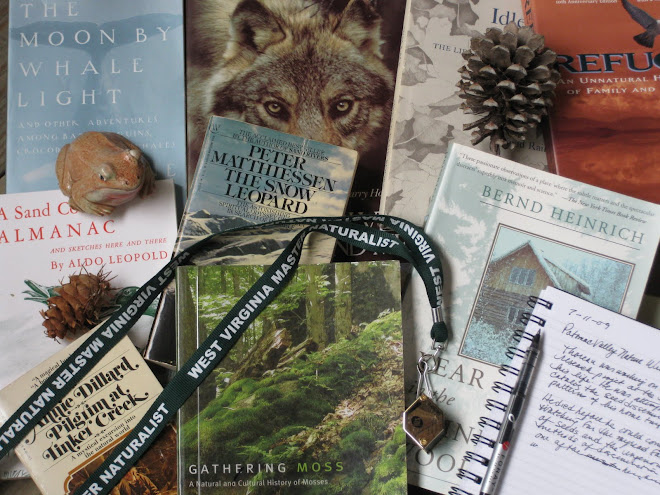
In January 2011 PVNWG celebrates the beginning of our third year (!) by paying tribute to Aldo Leopold and his work A Sand County Almanac. Leopold is a fitting author to follow on the heels of Pancake who plumbs the depths of wrongs perpetuated by the mining industry. He richly deserves his place next to Rachel Carson and Thoreau in the pantheon of environmental writer/heroes.


The summary below* is lifted from The Aldo Leopold Foundation website. This site has a wealth of information about Leopold and the influence he has had on conservation and our awareness of the biotic community--which only continues to grow. The Foundation is putting Leopold's ideas to work. It has developed some exciting projects to bring people together for the benefit of the environment. Please click on the link to check it out. And don't miss the moving preview of the film Green Fire: The Life and Legacy of Aldo Leopold.

*Admired by an ever-growing number of readers and imitated by hundreds of writers, A Sand County Almanac written by Aldo Leopold serves as one of the cornerstones for modern conservation science, policy, and ethics. First published by Oxford University Press in 1949 – one year after Leopold’s death – it has become a classic in the field equaled in its lasting stature only by Henry David Thoreau’s Walden.

While Aldo Leopold was writing in the 1940’s he could not have imagined the far-reaching impact his book would have. Over two million copies have been printed and it has been translated into nine languages.

Long respected in his own fields of forestry and wildlife management, Aldo Leopold was a prolific writer for scientific journals and conservation magazines. However, in 1937, sometime after his fifty-third birthday, Leopold became increasingly focused on reaching the general public with his conservation message. Working over a twelve-year period, Leopold wrote, re-wrote, and re-wrote again, essays that both informed people of how the natural world worked, and inspired people to take action to ensure the future health of the land and water that sustains all life.

Not only was this influential book late to develop in Leopold’s mind, it was very nearly never completed. A week after Oxford University Press agreed to publish his manuscript, titled “Great Possessions,” Aldo Leopold suffered a heart attack and died while fighting an escaped grass fire on a neighbor’s property.

Led by Luna Leopold, Aldo’s son, a group of Leopold’s family and colleagues collaborated on the final editing of the book, reluctantly agreeing to one significant change; renaming the book from Leopold’s working title “Great Possessions” to A Sand County Almanac and Sketches Here and There.

Through science, history, humor, and prose, Leopold utilizes A Sand County Almanac and its call for a Land Ethic to communicate the true connection between people and the natural world, with the hope that the readers will begin to treat the land with the love and respect it deserves.

Date and venue for PVNWG January 2011 meeting to be announced. (NOTE: MEETING SCHEDULED FOR SUNDAY, JANUARY 9 at 2:00 PM. ) New members interested in attending please email pvnaturewriters@gmail.com for details.

Pancake Work Sparks Concern: December 2010 Meeting Report


Our December 5 meeting was facilitated by member Joy Pardue. Here is her summary of the group's thoughts on Ann Pancake's Strange As This Weather Has Been.

The afternoon was cool with blustery winds. A cozy fire in a room full of books provided a great setting for our discussion.

Diane had printed out some of her thoughts which gave us a good starting place. She commented that before she began reading the book, she flipped through looking for chapter titles and was perplexed to find only "short single-word titles that were no help at all." After reading a few chapters, she realized these were the names of the characters and each chapter was devoted to that particular character. She thought it was difficult to read many of the characters because of the stream-of-consciousness style...and the "Appalachianization' of the speech and thought." Others agreed that phrases and phrasing were sometimes awkward.

Generally, however, we all agreed that this style was quite effective. Cheryl was the first to comment that switching back and forth among the characters lessened the impact of their wretched experiences. Had this story been told in chronological order and/or without a change in perspective, it would have been 'too much' to absorb. Even so Pancake addressed the ever-present disasters in almost every chapter - through memories, daily life and fears about the future.

Descriptions of the natural beauty of the mountains surrounding this community were woven into the story alongside descriptions of the 'slaughter' and devastation of the land. Pancake highlighted this love of place through several characters in particular: Lace's mother, Lace, Bant (her daughter) and Mogey. Through her excellent passages describing the wondrous enchantment of the mountains and the inhabitants’ reverence for their home, the author indirectly addressed the question "why couldn't/didn't they just leave."


Throughout the book, those closely connected since birth answered this question in various ways. Mogey's (Lace's uncle) musings were eloquent and stirring. One passage, based on an experience he'd had at age 10, seems worthy of re-reading:

"Somehow a rock fall had come and made like this room...I stepped into that
little room...something layered down over my self...the feel of a warm bath with
current in it, a mild electric...once it had currented all the way through me
and reached my very ends, it kept on going. It blended me right on out into the
woods...took me beyond myself...I saw then how before I'd been hidden, how I'd
believed myself smaller than I really was. It made me feel bigger in
myself...and it made me feel more here.... And with it came total sureness. And
with the total sureness came peace."
Understandably, several members agreed this chapter was the best of the book.


In another reference as to why so few bring themselves to leave, Bant condensed the dilemma of her parents nicely. "

Bottom line never changed. Lace wanted to stay even though she was convinced
we'd be washed out. Jimmy Make wanted to leave though he didn't think it would
ever get as bad as Lace thought."


Having grown up in a coal-mining community, Jennifer clarified some of the terms pertaining to the mines and filled in details about the mining process. She also commented on the social structure and mores in her community in particular. Even now, not many youngsters are able to find new pathways into life.


By the time we concluded the meeting, everyone expressed an interest in making a field trip to a mountain-top-removal site and agreed to try to make this happen. Jennifer pointed out we'd never get into an area being actively mined; instead we'd likely see a 'restored' mountain. Not a one of us believe we'll see something better - or even as good as – nature’s creation.


Much has been written revealing the exploitation of the land and the people living where coal is to be found - most of it heart-rending. Tragically, events such as these have been occurring in Appalachia for more than a century and are on-going here in WV and in many other coal communities on the planet. We wondered 'how might we help?' and the consensus is that helping individuals or families would be the most effective approach. Clearly, this book touched our hearts and gave us much to think about.

Saturday, November 13, 2010

PVNWG MEETS DECEMBER 5 TO DISCUSS ANN PANCAKE WORK

Due to the holidays and other scheduling conflicts, PVNWG will meet December 5 at 2:00 PM at a member's home. The November selection, Strange As This Weather Has Been by Ann Pancake is the topic for discussion. New members who wish to attend the meeting should email pvnaturewriters@gmail for details.

Monday, November 1, 2010

ANN PANCAKE IS AUTHOR FOR NOVEMBER


Our group has selected a fiction work for November's read: award-winning West Virginia author Ann Pancake's Strange As This Weather Has Been.

The book dramatizes the impact of rapacious mining on the members of an Appalachian family, their land and their culture's place-based traditions. For information about the author and links to reviews, see Pancake's blog here. Read Pancake's short story "The End of the World in Slow Motion" online here
Read historical background for the book here
Date and place for November meeting TBA. (Now scheduled for December 5, see above post.)

Thoreau at the 'Pond"


Our October meeting on the afternoon of the 24th took place lakeside at Greenbrier State Park in Maryland, a fitting scene in which to share our thoughts on Thoreau and the fruits of his sojourn by Walden Pond. Glimmering curtains of autumn color, pure blue sky above, all mirrored by the calm eye of the water's expanse must have intoxicated us and loosened our tongues. Thoreau received quite an unrestrained critique. Perhaps we were also emboldened by the many years distancing us from this author and somehow perversely moved to demythologize his global reputation. "Holier than thou" and "hypocritical" were some of the words bandied about.


It is said that Thoreau wrote of self-reliance while trucking his laundry to his mother's home. He himself admits to borrowing an ax to chop trees for his cabin. Before conceiving his Walden project, Thoreau and a friend built a fire in a stump one day. The fire spread and numerous acres of the town's woodlots were burned. However, Thoreau scholars remind us that laundry in his time included few items, and laundry of a paupered would-be writer fewer still. Thoreau himself assures us he returned the ax to its owner sharper than when he borrowed it. And Thoreau forever rued his role in the destruction of the woods. Perhaps that incident even contributed to his subsequent living experiment.


On of the assumptions about Thoreau is that Walden is a tale of how he separated himself from society. On the contrary, the book frequently refers to his many visitors. It includes a whole chapter on the history of Concord and the surrounding countryside, gleaned from interviews with local folk. Thoreau studied human behavior, his own and that of others, just as much as the natural environment. He makes admiring as well as critical observations of people and their interactions with nature. He sees fishermen to be as fitting a subject for naturalist study as the the fish. He does have some cutting remarks on the fashions and ambitions of the day that can feel like a sharp poke in the ribs. There are many parallels between his time and ours, between us and him.


Our group remarked on the painstaking detail, with which he described natural phenomena. His description of the process of the Pond's water freezing at winter's onset runs on for pages. His command of the English language to paint pictures and voice subtle ideas made an impression on us--in these days of media-based education and electronics-obsessed youth. What message in his medium? We went off on a tangent bemoaning texting and twitterings. Without a cell phone or digital camera to distract, Thoreau used the artistry of words to explore within, to express and connect. If he lived today, what would Thoreau do? Reading him, we wonder, how should we live?


In Walden, homely explorations of bean-growing, plastering, fireplace-building and cooking are set against lofty philosophizing. As Thoreau lived on Walden Pond, nature and essential human doings are seamlessly interwoven. He brings the same attention and respect to chopping wood and carrying water, as he does to pondering the stars. As a seeker Thoreau is as human as any of us, he had foibles aplenty. But his short life and writings continue to inspire us. In the end, our group agreed that we need the mild wildness of Thoreau to wake us up from our routines. Walden bears reading not just every generation, but every decade. In each season of our lives, a dip in the waters of Walden will refresh.

Tuesday, September 28, 2010

Author for October: Henry David Thoreau

I have a room all to myself: it is nature. Henry David Thoreau

Henry David Thoreau is our author for October 2010. The collection of essays entitled Walden is the primary selection but members can read any of his writings that have to do with nature. Reading excerpts is a good way to get a taste of his ideas, personality, and philosophy in easily digested bits. Opening Walden to any page and reading one paragraph each day can work too. The book does not have to be read in order. Good chapters to start with are "The Pond in Winter" and "Spring."

For the ultimate in-depth experience, see if you can get your hands on the acclaimed annotated version of Walden, edited by Jeffrey S. Cramer, who is curator of collections at the Henley Library of the Thoreau Institute. (Click on book cover at left to link for more information.)

Encouraged by mentor Ralph Waldo Emerson, Thoreau became a dedicated journal -keeper. Works he intended for publication were inspired by and fashioned from his in-the-moment journal entries. Portions of Thoreau's voluminous journals (7000 pages)have been published in recent years and these are a illuminating window into his way of experiencing the world and capturing his thoughts. (Look for A Year in Thoreau's Journal:1851 or I to Myself, annotated journal excerpts edited by the same Mr. Cramer mentioned above.)

Thoreau's perception of the relationships within nature is often called the foundation of ecology. He is considered one of the most powerful voices for environmental preservation. He was also one of the first naturalists in North America to apply the principles in the controversial Origin of the Species by his contemporary Charles Darwin.

Many devotees of today's simplicity movement pay homage to Thoreau. He was prescient--he saw where unrestrained "progress," technology and materialism would lead and what devastating toll these trends had already taken on the natural world in his lifetime.

Perhaps Thoreau's work will inspire you to look at nature in a different way, or even do more nature journaling. Please jot down your thoughts and responses to share at our next meeting in late October. Members will be notifed of the time and place by email. Prospective new members should email pvnaturewriters@gmail.com for details.

Read Thoreau's writings online (Including Walden)
http://www/vcu/edu/engweb/transcendentalism/idea/nature.html

The Walden Woods and Thoreau Institute:
http://www.walden.org/

Thoreau nature quotes:
http://www/walden/org/Library/Quotations/Nature

Scientists use Thoreau's journals to study climate change:
http://www.calliope.org/thoreau/thorowarming.html

Wednesday, August 11, 2010

SEPTEMBER 2010 MEETING DATE CONFIRMED

Summer is winding down but Potomac Valley Nature Writing Group is gearing up for an exciting Fall and Winter of great reads. We are a community of kindred spirits--nature lovers who appreciate good writing about our favorite subject in all its variety.

September's meeting is confirmed for Sunday, the 19th, 3:00 PM at a member's home. We will be honoring Small Wonder by Barbara Kingsolver and Letters From Eden: A Year at Home, In the Woods by Julie Zickefoose. (Please check out the comment Julie herself made on the previous post below!)

If you are new to PVNWG and would like to attend, please email pvnaturewriters@gmail.com for directions to the meeting. We would love to have you join us!