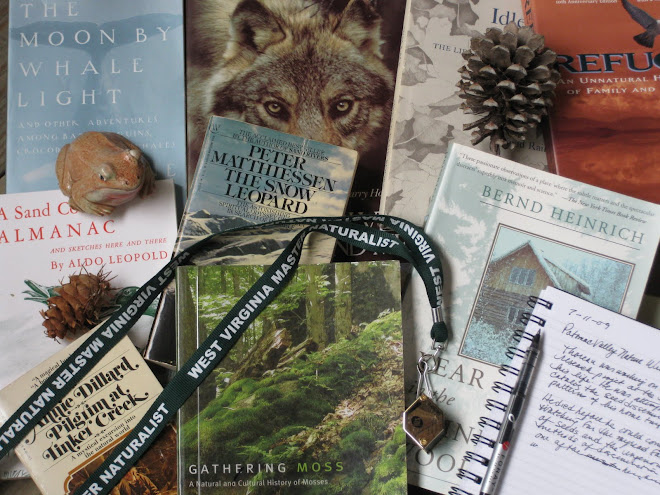
This blog exists only as a historical document of the activities of the Potomac Valley Nature Writing Group (PVNWG) , a book club that was associated with the Potomac Valley Audubon Society. The book club was disbanded so this blog is no longer being updated. To see current activities of the Potomac Valley Audubon Society: https://www.potomacaudubon.org/
Thursday, April 1, 2021

Friday, September 11, 2015
The Triumph of Seeds
 We are now heading into late summer and plants are setting seed. One of the things I most enjoy at this time of year is marveling at the variety of forms produced by seed bearing plants.
August and September's book selection is Thor Hanson's The Triumph of Seeds: How Grains, Nuts, Kernels, Pulses and Pips Conquered the Plant Kingdom and Shaped Human History.
"Spanning the globe from the Racoon Lodge--Hanson's backyard writing hangout cum laboratory--to the coffee shops of Seattle, from flower patches to the spice routes of Kerala, this is a book of knowledge, adventure and wonder, spun by a writer with both fireside charm and hard-won expertise. It is a worthy heir to the grand tradition of Aldo Leopold and Bernd Heinrich and essential reading for anyone who loves to see a plant grow."
For more on seeds see my blog post here: http://trillium-theblogwithoutaname.blogspot.com/2009/08/diaspora.html
Friday, May 8, 2015
From Frost to Flowers: Three Books for May June July 2015
In Wily Violets and Underground Orchids, Peter Bernhardt takes us on a grand tour of the botanical realm, weaving engaging descriptions of the lovely shapes and intriguing habits of flowering plants with considerations of broader questions, such as why there are only six basic shapes of flowers and why the orchid family is so numerous and so bizarre. Everyone from amateur naturalists and gardeners to plant scientists will find this book a lively guide to botanical lore.
In The Rose's Kiss, Peter Bernhardt presents a fascinating and wide-ranging look at the natural history of flowers—how they look, what they do, and their often hidden interactions with the surrounding environment and other living organisms upon which they depend for their survival. You'll discover why flowers are so colorful, how they evolved, and how insects exploit them for their nectar. This is a book for all flower lovers, from naturalists and gardeners to poets and botanists.
In Anatomy of a Rose, Sharman Apt Russell eloquently unveils the "inner life" of flowers, showing them to be more individual, more enterprising, and more responsive than we ever imagined. From their diverse fragrances to their nasty deceptions, Russell proves that, where nature is concerned, "wonder is not only our starting point; it can also be our destination." Throughout this botanical journey, she reveals that the science behind these intelligent plants--how they evolved, how they survive, how they heal--is even more awe-inspiring than their fleeting beauty.
Friday, January 23, 2015
Robert Frost, Poet Author for January through March 2015
 The author for January through March 2015 is Robert Frost. Frost is renown for the nature imagery in his poetry. I have not studied his work in depth, but have found his nature descriptions breath-taking in their masterful simplicity and evocation of the feelings that natural scenes and phenomena can induce in us. (The only other sound's the sweep of easy wind and downy flake.) However, some critiques are quick to point out that Frost is not a "nature poet" as were the Romantic poets of England, for example, Wordsworth:
[The] contrast between man and nature is the central theme of Frost's nature poetry. Whereas Wordsworth sees in nature a mystical kinship with the human mind, Frost views nature as essentially alien. Instead of exploring the margin where emotions and appearances blend, he looks at nature across an impassable gulf. What he sees on the other side is an image of a hard, impersonal reality. Man's physical needs, the dangers facing him, the realities of birth and death, the limits of his ability to know and to act are shown in stark outline by the indifference and inaccessibility of the physical world in which he must live.
Thus Frost sees in nature a symbol of man's relation to the world. Though he writes about a forest or a wildflower, his real subject is humanity. The remoteness of nature reveals the tragedy of man's isolation and his weakness in the face of vast, impersonal forces. But nature also serves to glorify man by showing the superiority of the human consciousness to brute matter. In this respect, nature becomes a means of portraying the heroic. There is a fundamental ambiguity of feeling in Frost's view of nature. It is to be feared as man's cruel taskmaster, scorned as insensible, brutish, unthinking matter; yet it is to be loved, not because it has any secret sympathy for man - "One had to be versed in country things/ Not to believe the phoebes wept"- but rather because it puts man to the test and thus brings out his true greatness. The Pastoral Art of Frost
Over the next few months I will be reading Frost and putting this idea to the test. I will blog about my own perceptions. Whatever his poetry seems to say about nature, there is no doubt that he loved the rural life and living close to nature. Click here to read A Walk with Robert Frost. It describes his love for botanizing.
I visited one of Frost's homes decades ago--a farm where he stayed during his summer sojourns at the Breadloaf Writer's Conference near Middlebury, Vermont. I seem to remember peering in the window of his writing cabin or even walking through and seeing the comfortable chair he favored, where he wrote with a board across the armrests. But I think I must be imagining that. Although A Walk with Robert Frost alludes to a Morris chair. Perhaps I didn't imagine it after all.

Wednesday, October 15, 2014
The Snoring Bird Will Keep You Awake All Night
The selection for October through December 2014 is Bernd Heinrich's The Snoring Bird: My Family's Journey Through A Century of Biology. This is the fourth time we so honor Mr. Heinrich, he is at the top of his game as an author here. Don't be intimidated by the book's sheer size, you won't want it to end!
From Amazon:
Although Gerd Heinrich, a devoted naturalist, specialized in wasps, Bernd Heinrich tried to distance himself from his "old-fashioned" father, becoming a hybrid: a modern, experimental biologist with a naturalist's sensibilities.
In this extraordinary memoir, the award-winning author shares the ways in which his relationship with his father, combined with his unique childhood, molded him into the scientist, and man, he is today. From Gerd's days as a soldier in Europe and the family's daring escape from the Red Army in 1945 to the rustic Maine farm they came to call home, Heinrich relates it all in his trademark style, making science accessible and awe-inspiring.
“A remarkable story.” (Portland Press Herald)
“...beautifully written story of a man’s efforts to reconstruct posthumously the life of his father...” (Jared Diamond, author of Guns, Germs, and Steel and Collapse)
“...scientist and naturalist of the first rank and a nature writer of uncommon talent...” (Edward O. Wilson)
“...amazing saga, full of twists and turns...his magnum opus...vividly descriptive...he has produced his best book ever...” (Bill McKibben, author of The End of Nature and Deep Economy)
“...I couldn’t leave its pages...it has joined the small collection of my most favorite book...” (Elizabeth Marshall Thomas, anthropologist and author of the bestseller The Hidden Life of Dogs)
“...extraordinary...a memoir of fun, daringness and intellectual curiosity, the heartwarming evolution of a modern biologist.” (Jean Craighead George, award-winning author of Julie of the Wolves)
“...by one of the premier naturalists of our time...a splendid book, truly compelling, and bound to endure.” (Thomas Eisner)
“Heinrich’s stunning family saga...his magnum opus...vividly descriptive...he has produced his best book ever...” (Alice Calaprice, award winning editor; author of the Quotable Einstein books, The Einstein Almanac, and Dear Professor Einstein)
“...You will not want to put it down...an engrossing and powerful narrative of human achievement...” (Samuel W.F. Wolfgang, author of German Boy and The War of Our Childhood)
“One of the finest living examples of that strange hybrid: the science writer.” (Los Angeles Times Book Review)
“Heinrich, who combines his keen scientific eye with the soul of a poet, enthralls.” (New York Times Book Review)
“The Snoring Bird...show[s] readers why the work of an observant field biologist still matters.” (Los Angeles Times Book Review)
“Arguably today’s finest naturalist author...our latter-day Thoreau.” (Publishers Weekly)
“Some of Heinrich’s most lyrical writing...the future scientist as a footloose nature boy.” (New York Times Book Review)
“...brilliant...there is in Heinrich’s every page, wonderment.” (San Francisco Chronicle)
“...splendid nature writing...a fascinating glimpse of the growth of one scientist’s mind. Heartily recommended.” (Library Journal)
Friday, July 4, 2014
WE ARE ALL STAR STUFF: COSMOS FOR JUL/AUG/SEP
Our gaze turns skyward to Carl Sagan's COSMOS, written to accompany the groundbreaking COSMOS television series. The book is the biggest selling science book of all time, surpassed only by Stephen Hawking's A Brief History of Time. Although some of the science explored in this book has since progressed to new insights, Sagan's personality, humanity and unique perspective makes this still a very worthwhile and illuminating read. At the time it was written, the cold war and the prospect of nuclear annihilation permeated everyone's subconscious, and this theme is repeatedly touched on in the book. Now we face a different type of end time scenario due to climate change, so this may be a very timely selection to follow Apocalyptic Planet. 
Saturday, April 12, 2014
Singing in the Wilderness of an Apocalyptic Planet APR/MAY/JUN 2014
For April, May and June, we combine voices from the past and present. Our selections are The Singing Wilderness by Sigurd Olson and Apocalyptic Planet: Field Guide to the Everending Earth by Craig Childs, winner of the 2013 Sigurd Olson Nature Writing Award. For information on Mr. Olson, one of our most revered authors and environmentalists, check out The Listening Point Foundation, which is dedicated to preserving his wilderness retreat and advancing his legacy of wilderness education. See Mr. Child's website here for details on his book. It will be interesting and to contrast these two writers and their perspectives.
Note: Google now will not allow me to upload photos unless I download their improved surveillance browser Google Chrome, so until that time, this blog will be unadorned with images, unfortunately. Please go to the websites listed for images of the authors and their books.
Note: Google now will not allow me to upload photos unless I download their improved surveillance browser Google Chrome, so until that time, this blog will be unadorned with images, unfortunately. Please go to the websites listed for images of the authors and their books.
Sunday, January 5, 2014
JAN-MAR 2014: JON YOUNG's WHAT THE ROBIN KNOWS

“Jon Young is one of the heroes of the new nature movement, an expansion of traditional environmentalism.
With What the Robin Knows, he opens a door to a universe that overlaps modern life, a world lost to most, but found by some—because of teachers like Jon. This elegant book will deepen the kinship between humans and other species. It decodes our common language.”
—Richard Louv, author of The Nature Principle and Last Child in the Woods
| |
“Here is the ancestral wisdom passed down from Apache elder Stalking Wolf to renowned tracker Tom Brown to Jon Young himself, who in turn passes on to the reader the art of truly listening to the avian soundscape. With all senses more finely tuned, you’ll find yourself more aware of your surroundings, slowing down, and reconnecting with a native intelligence and love of the natural world that lies deep within each of us.”
—Donald Kroodsma, author of The Singing Life of Birds and Birdsong by the Seasons
| |
| “What the Robin Knows is a fascinating introduction to nature study beyond putting names on what we see, not just a guide to paying attention outdoors but full of tips on how to do it. It should help us discover the world of nature around us, often glimpsed but too often overlooked. This is less a book to read than one to use, one that will enrich our hours outdoors.” —Thomas R. Dunlap, author of In the Field, Among the Feathered | |
| “Jon Young knows birds, and you will, too, after reading his marvelous book. You’ll discover a universal bird language that will speak to you wherever you go outdoors. Every nature lover should read this book.“ —Joseph Cornell, author of Sharing Nature with Children and John Muir: My Life with Nature. | |
| “This book turns us inside out, opening our minds onto the wider mind of the land itself. It’s a brilliant work, born of a lifetime of listening, teaching, and tracking what really matters. By waking our animal senses, Jon Young’s work replenishes our humanity.” —David Abram, author of Becoming Animal and The Spell of the Sensuous | |
| “Naturalist Young (co-author: Coyote’s Guide to Connecting with Nature, 2008) explains how to understand the language of birds. Trained in anthropology at Rutgers, the author’s passion for bird-watching began in the salt marshes of southern New Jersey where he was raised, but he attributes his real learning to a series of mentors who trained him in Native American traditions. Young believes that native and scientific knowledge about nature are complementary, and that animal communication is “never just the robins communicating with other robins”—they transmit information to other species, which follow their calls. In his wilderness-training classes, Young teaches students how to listen and understand these communications. However, he notes, it’s a skill that can be practiced by anyone in the backyard or a local park, by choosing a “sit spot” and quietly observing what is happening in the same area every day. Young stresses the need to sit quietly, allowing the birds to accept our presence; after first flying away in alarm, they will return to their territory. “If we learn to read the birds…we can read the world at large,” he writes. “The types of birds seen or heard, their numbers and behaviors and vocalizations, will reveal the locations of running water or still water, dead trees, ripe fruit, a carcass, predators, fish runs, insect hatches, and so much more.” This information, shared by all the birds and animals living in a habitat, was crucial to the survival of hunter-gatherer societies. A trained tracker can learn to recognize how the variations in birdcalls and their behavior when alarmed can identify different predators such as hawks, crows and cats. A sophisticated guide for amateur bird watchers and a door-opener for newbies.” -Kirkus’ Reviews | |
Thursday, November 7, 2013
THOR HANSON's FEATHERS FINISHES 2013
I have started reading our last selection of 2013, Feathers: The Evolution of a Natural Miracle by Thor Hanson. Its one of those books that I want to savor since there is so much information, so many exciting ideas, presenting a multi-faceted perspective of the subject, and all written in a very engaging and often humorous first person. It even has illustrations! So I'm dedicating both November and December to give the book the attention it deserves. Hanson's book
 is critically acclaimed, and won the John Burroughs medal, one of the highest honors in nature writing. Here is the back cover copy:
A sparkling history...popular natural history at its best. NEW SCIENTIST
Feathers are an evolutionary wonder: aerodynamic, insulating, beguiling. From flying dinosaurs to showgirls on the Las Vegas Strip, their story spans hundreds of millions of years--yet has never been fully told. In Feathers, biologist Thor Hanson details a sweeping natural history of how feathers have been used to soar, attract, and adorn through time. Enlivened by the author's field experience and wide-ranging research, Feathers is a captivating account of the human fascination with this most enchanting subject.
An illuminating study of an evolutionary marvel THE ECONOMIST
A winning book about the extraordinary place of feathers in animal and human history WALL STREET JOURNAL
An impressive blend of beauty, form, and function. NATURAL HISTORY
Thor Hanson's storytelling is enchanced by his infectious excitement...Feathers is a compelling introduction to one of nature's wonders. NATURE
Dr. Thor Hanson is a conservation biologist, Switzer Environmental Fellow, and member of the Human Ecosystems Study Group. His books include The Impenetrable Forest: My Gorilla Years in Uganda and Feathers: The Evolution of a Natural Miracle. In addition to the John Burroughs Medal, Feathers was nominated for The Samuel Johnson Prize. It also received the AAAS/Subaru SB&F Prize and a Pacific Northwest Booksellers Award. His many media appearances have included NPR's Fresh Air, PRI's The World, and The Current on CBC. Hanson lives with his wife and son on an island in the Pacific Northwest. See his website: http://www.thorhanson.net/
Thursday, October 3, 2013
RAPTORS RULE IN OCTOBER 2013
Beginning in early September we climb to overlook sweeping vistas of ridge-valley terrain, where updrafts of warm air lift the wings of a fierce procession: broad-winged, sharp-shinned, red-tailed and rough shouldered hawks, kestrels, ospreys, peregrine falcons, golden eagles and others. One of the best places to view the phenomenon is Hawk Mountain in the Blue Ridge of eastern Pennsylvania. The area includes 13,000 acres of protected private and public land, including the 2,600 acre Hawk Mountain Sanctuary, where a short hike brings you to incredible scenic views. The site was formerly a killing field, where hunters gathered annually to shoot hundreds of birds of prey, then considered to be pests.
The Sanctuary was incorporated in the late 1930's. The transformation of public awareness about Hawk Mountain and the success of its conservation mission is owed in large measure to Maurice Broun and his wife Irma, the first guardians of the sanctuary.
 Broun's book Hawks Aloft: The Story of Hawk Mountain is our October 2013 selection. Members of PVNWG, field glasses at the ready, will also visit the sanctuary which has an 8-mile trail system, visitor center, bookstore, and interpretive programs.
We give honorable mention to another author Scott Weidensaul. His Raptor Almanac is a compendium of raptor lore and images that provides hours of fascination.
Tuesday, September 10, 2013
FOREST UNSEEN FOR SEPTEMBER 2013
Our selection for September 2013 is David Haskell's The Forest Unseen: A Year's Watch in Nature.
 Winner of 2013 Best Book Award from the National Academies
Finalist for 2013 Pulitzer Prize in General Nonfiction
Runner-up for 2013 PEN/E.O. Wilson Literary Science Writing Award
Winner of the 2013 Reed Environmental Writing Award
Winner of the 2012 National Outdoor Book Award for Natural History Literature
A biologist reveals the secret world hidden in a single square meter of forest
“…a welcome entry in the world of nature writers. He thinks like a biologist, writes like a poet, and gives the natural world the kind of open-minded attention one expects from a Zen monk rather than a hypothesis-driven scientist.” James Gorman, The New York Times
“Very much a contemporary biologist in his familiarity with genetics and population ecology, he also has the voracious synthetic imagination of a 19th-century naturalist. Most important, Mr. Haskell is a sensitive writer, conjuring with careful precision the worlds he observes and delighting the reader with insightful turns of phrase.” Hugh Raffles, The Wall Street Journal
“…focusing not on the showy megafauna but on the small and fundamental forest dwellers, from glimmering lichen to slow-moving slugs. He writes with a scientist’s meticulous attention to detail and a poet’s way with words. As he spins his tales of the tiny and the ordinary, we see the big picture issues, from evolution to climate change, unfold in the everyday world.” from the PEN/E. O. Wilson Judges’ Citation
“…a new genre of nature writing, located between science and poetry.” Edward O. Wilson, Harvard University
“David Haskell’s The Forest Unseen is a ‘nature book,’ and a great one, but it’s also and less obviously a book about human nature. You can’t read its lyrical, tactile prose without confronting the whole question of our place in the natural order, and of what we’re doing here. If we want to last much longer on this planet, we’ll have to learn to think differently and more deeply about those things, and Haskell can be one of our guides.” —John Jeremiah Sullivan, author of Pulphead
“An extraordinary, intimate view of life… Exceptional observations of the biological world…”
Kirkus Reviews, Starred Review for “books of remarkable merit.”
The Forest Unseen was published on March 15th, 2012, by The Viking Press, an imprint of Penguin USA. The Penguin paperback edition was published on March 26th, 2013. A short introductory video is available on YouTube.
David Haskell’s interviews on The Diane Rehm Show and To The Best of our Knowledge are now available online. Links to full reviews are here.
Members of PVNWG will attend an open house at Adkins Aboretum on September 29 to hear the author speak!
NOTE: PVNWG has suspended regular monthly discussion meetings. Comments about books can be made online using the comment feature. Personal book reviews may be submitted to pvnaturewriters@gmail.com for consideration to be posted on the blog. Original nature writing based on personal experience may also be submitted for inclusion on the REFLECTIONS page of the blog.
Sunday, June 2, 2013
MEETING TO DISCUSS TOM BROWN JR CANCELLED
Due to difficulty in scheduling a date, time and place convenient for enough members, the June 2 PVNWG meeting to discuss Tom Brown Jr,'s Field Guide to Nature Observation and Tracking is cancelled. We did not choose a book for Summer Hiatus so Brown's field guide can serve as a challenge for members to enlarge their experience in the next few months using his techniques. We hope to share some tales of wild naturalist adventures when next we meet. The best story wins a prize!
Sunday, April 28, 2013
Tracking Tom Brown, Jr. in May 2013
The tragedy in life is not what men suffer, but what they miss. Thomas Carlyle
This month our reading hours are minimal, as we "get out there." The goal is to immerse ourselves in nature by using our full complement of human capacities, especially those that are dormant and compromised by our comfort-loving modern ways of life.
Tom Brown, Jr. has made a career of mentoring others through this "deconditioning." Part I of his book Nature Observation and Tracking guides us through specific exercises and thought experiments--to fine-tune our senses, release our inhibitions, and break through our habitual blindness.
In the coming weeks, we each embark on a personal discovery following his path. At our next meeting we will report on our experiences and practice as a group some of the skills we have learned. This last book of the season also sets us up for a summer of diving deeper than ever into naturalist adventures.
Mr. Brown himself is a controversial fellow, a brief span of web surfing calls into question his autobiography as a bit of commercial mythmaking. Brown supposedly was mentored from childhood by an Apache elder named Stalking Wolf, from whom he learned his philosophy and wilderness acumen. Whether this is true or not, Brown's methods do have power if one has the courage to try them and the patience to develop them. Brown is a darling of the survivalist set, he has authored multiple works of fiction and nonfiction and draws participants the world over to his workshops in the Pine Barrens of New Jersey and in California.
 Two other authors should be mentioned here. Joseph Cornell was early in the vanguard of the nature awareness movement. His Sharing Nature With Children sold 500,000 copies in over 20 languages, sparking a worldwide revolution in nature education and becoming an instant classic. Cornell's books now serve as popular nature-education resources all over the globe. See some of his nature activities here.
Richard Louv, in The Last Child in the Woods, hatched the concept nature-deficit disorder, and spawned an international movement to reconnect children with nature. He is a tireless advocate for the crucial developmental impact of unfettered play and exploration in the natural world. His newer title, The Nature Principle, translates this effect to adults. Citing extensive research, he shows how we can tap into the restorative powers of the natural world to boost mental acuity and creativity; promote health and wellness; build smarter and more sustainable businesses, communities, and economies; and ultimately strengthen human bonds.

Friday, March 29, 2013
LETS GO SWAMP WALKING!

PVNWG welcomes salamander season with our April author David Carroll's Swampwalker's Journal: A Wetlands Year.
From the Barnes and Noble site:
David Carroll has dedicated his life to art and to wetlands. He is as passionate about wetlands, and the creatures who live there, as most of us are about our families and closest friends. He has stayed in touch with individual turtles for twenty years, watching them dig into hibernation in the winter, greeting them as they emerge in the spring, following them as they breed, feed, and roam through the warmer months. He knows frogs and snakes, bears and beavers, muskrats and minks, dragonflies, caddis flies, birds, water lilies, pickerel weed, cattails, sedges, and everything else that swims, flies, trudges, slithers, or sinks its roots in swamp, marsh, or bog.
— Christian Science MonitorREAD ABOUT OUR GROUP'S WETLAND FORAY "A MARSH MARCH IN APRIL" in REFLECTIONS (click on image in left column).
In Swampwalker's Journal Carroll shares his knowledge and passion with the rest of us, taking us on a miraculous year-long journey, illustrated with his own elegant drawings, through the wetlands, and revealing why they are so important to his life and ours - and to all life on Earth.
Entertainment Weekly
In the final volume of his "wet-sneaker trilogy" (following The Year of the Turtle and Trout Reflections), naturalist Carroll covers four seasons of wading through mashes, swamps, bogs, and fens. [His] eye for detail serves him well, whether he's spying on a tiny garter snake struggling to suck down a much larger wood frog or watching a raccoon savagely digging a turtle out of its shell.Thomas Palmer
Though he presents his findings as an illustrated daybook, this is no simple record of facts, but a thorough account of the distinguishing features of swamps, marshes, floodplains, bogs, and vernal pools, indexed to aid reference....Carroll's quiet manner and effortless sensitivity to detail suffuse his wet-bottomed landscapes with a dreamlike quality shaded by knowledge of how quickly such places can disappear.— Christian Science Monitor
Kirkus Reviews
There is no greater wetland emissary than Carroll, who takes to the funk and spook of a swamp with avidity and returns to masterfully tell of its scarce-visited glories. "To have a bit of the landscape to oneself, to not be crowded in the landscape of the current epoch, one is almost obliged to withdraw to the swamp." Then again, Carroll would venture there even if he were the last person on Earth, for he loves the place, along with vernal pools, marshes, floodplains, peatlands, fens, the whole nine freshwater-wetland yards. Here Carroll relates with enthusiasm, always gracefully pitched, the sheer pleasure to be had in visiting wetlands in all seasons. Nowhere else can you witness blue flag and red canary grass tipping the hand of an unmown pasture that is also a vernal pool come spring, complete with trilling thrush, drilling insects, five species of obligate salamanders, and a chorus of peepers that draws you in toward "a center of almost unbearable intensityWednesday, March 6, 2013
Gretel Erlich's The Solace of Open Spaces for March 2013
PVNWG members meet at a member's home on March 24 to discuss our impressions of Gretel Erlich's The Solace of Open Spaces.
Born in 1946 in Santa Barbara, California, Erlich began to write full time in 1978 while living on a Wyoming Ranch, after the death of a loved one. In 1985, she drew immediate acclaim with The Solace of Open Spaces, a collection of essays.
 From the publisher: Writing of hermits, cowboys, changing seasons, and the wind, Ehrlich draws us into her personal relationship with this "planet of Wyoming" she has come to call home. She captures the incredible beauty and the demanding harshness of natural forces in these remote reaches of the West, and the depth, tenderness and humor of the quirky souls who live there. Ehrlich, a former filmmaker and urbanite, presents in these essays a fresh and vibrant tribute to the new life she has chosen.
To Touch the Water, 1981,
The Solace of Open Spaces, 1985
Heart Mountain, 1988,
Drinking Dry Clouds: Stories from Wyoming, 1991
Islands, the Universe, Home, Viking Press, 1991
Arctic Heart: A Poem Cycle, Capra Press, 1992
A Match to the Heart: One Woman's Story of Being Struck by Lightning, 1994
John Muir: Nature's Visionary,National Geographic Society, 2000
This Cold Heaven: Seven Seasons in Greenland, 2001
The Future of Ice: A Journey Into Cold, 2004
In the Empire of Ice: Encounters in a Changing Landscape, National Geographic Society, 2010
Facing the Wave: A Journey in the Wake of the Tsunami, 2013
Born in 1946 in Santa Barbara, California, Erlich began to write full time in 1978 while living on a Wyoming Ranch, after the death of a loved one. In 1985, she drew immediate acclaim with The Solace of Open Spaces, a collection of essays.
 From the publisher: Writing of hermits, cowboys, changing seasons, and the wind, Ehrlich draws us into her personal relationship with this "planet of Wyoming" she has come to call home. She captures the incredible beauty and the demanding harshness of natural forces in these remote reaches of the West, and the depth, tenderness and humor of the quirky souls who live there. Ehrlich, a former filmmaker and urbanite, presents in these essays a fresh and vibrant tribute to the new life she has chosen.
"Ehrlich's best prose belongs in a league with Annie Dillard and even Thoreau. The Solace of Open Spaces releases the bracing air of the wilderness into the stuffy, heated confines of winter in civilization." San Francisco Chronicle
Click here to read an interview with the author about her 2001 work Cold Heaven.
Click here for biography of the author.
Selected Works:
Sunday, February 3, 2013
A Season in the Wilderness with Edward Abbey

 Edward Abbey was born in Home, Pennsylvania, in 1927. He was educated at the University of Mexico and the University of Edinburgh. When Edward Abbey died
in 1989 at the age of sixty-two, the American West lost one of its most eloquent
and passionate advocates. Through his novels, essays, letters and speeches,
Edward Abbey consistently voiced the belief that the West was in danger of being
developed to death, and that the only solution lay in the preservation of
wilderness. Abbey authored twenty-one books in his lifetime, including Desert Solitaire, The Monkey Wrench Gang, The Brave Cowboy, and The Fool's Progress. His comic novel
The Monkey Wrench Gang helped inspire a whole generation of environmental
activism. A writer in the mold of Twain and Thoreau, Abbey was a
larger-than-life figure as big as the West itself.
Benedicto: May your trails be crooked, winding, lonesome, dangerous, leading to the most amazing view. May your mountains rise into and above the clouds. May your rivers flow without end, meandering through pastoral valleys tinkling with bells, past temples and castles and poets' towers into a dark primeval forest where tigers belch and monkeys howl, through miasmal and mysterious swamps and down into a desert of red rock, blue mesas, domes and pinnacles and grottos of endless stone, and down again into a deep vast ancient unknown chasm where bars of sunlight blaze on profiled cliffs, where deer walk across the white sand beaches, where storms come and go as lightning clangs upon the high crags, where something strange and more beautiful and more full of wonder than your deepest dreams waits for you --- beyond that next turning of the canyon walls.Edward Abbey, Desert Solitaire
For more on all things Abbey visit Abbey's Web.
Sources: Cover, Desert Solitaire: A Season in the Wilderness, First Touchstone Edition, 1990; Edward Abbey: A Voice in the Wilderness, video, 1993; Abbey's Web, http://www.abbeyweb.net/
Monday, December 31, 2012
A Winter in The Outermost House
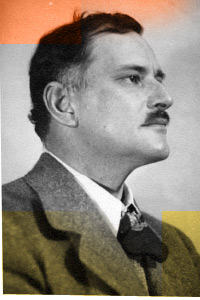 The world to-day is sick to its thin blood for lack of elemental things, for fire before the hands, for water welling from the earth, for air, for the dear earth itself underfoot." --Henry Beston
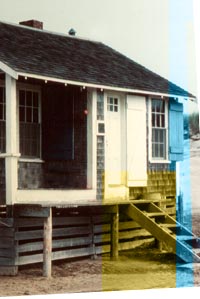
For December and January, our group has chosen The Outermost House: A Year of Life on the Great Beach of Cape Cod by Henry Beston. Beston is one of the deities in the pantheon of classic nature writers. His chronicle of a solitary year spent on a Cape Cod beach was written in longhand on the kitchen table in a little room with windows overlooking the North Atlantic and the dunes. Capturing the vividness of each event as it is seen and felt, the author describes the wonder and mystery of nature--the migrations of shore and sea birds, the ceaseless rhythms of wind and sand and ocean, the pageant of stars in the changing seasons. Permeating these pages is his perception of the relation of man to the cosmic picture.
In a 1964 ceremony on the dunes, the house itself was officially proclaimed a National Literary Landmark.
For more about the author and his work, see the excellent site developed by the Friends of Henry Beston.
We meet on January 27th to discuss the author and The Outermost House. Details, see "Next Meeting" in left hand column.
Friday, November 30, 2012
SIESTA LANE BY AMY MINATO FOR NOVEMBER 2012

Part of me knows that it would be easy to go back to my busy familiar life where I am marginally successful and known to others, if not to myself.
But not to myself.
Amy Minato decided to abandon a life of consumption for one year.
She moved from the busy streets of Chicago to a quieter, slower, simpler, and more natural existence in the pristine countryside of Oregon. The community she discovered, called Siesta Lane, became her very own Walden Pond.
Amy's experience there--in a group of like-minded men and women, all living in tiny cottages without electricity or running water--changed her forever. Like her reader, she challenged herself to see the bigger picture through a smaller lens.
Amy Klauke Minato is a poet, writer, and teacher. She holds advanced degrees in creative writing and environmental studies from the University of Oregon.
Bernd Heinrich: A wonderful story of resilience and courage. It touches the soul.
Publishers Weekly: Minato's lyrical prose tosses off beguiling evocations of the landscape and flora around her...
Robert Michael Pyle: A treat...we could all learn something we need to know: live simpler, live better.
Diana Abu-Jaber: Siesta lane is a beguiling story of self-discovery filled with the enchantments of the land and the body.
To join the discussion on December 2, email pvnaturewriters@gmail for details.
Sunday, October 7, 2012
ROGER TORY PETERSON:I AM FIRST A TEACHER
The month of October 2012 we are devoting to Roger Tory Peterson. Members may read All Things Reconsidered, a collection of his previously published Birdwatcher's Digest columns selected by his publisher Bill Thompson III. Click here for a review from the Seattle Times.

“Birding, after all, is just a game. Going beyond that is what is important.”
The Daily Reflector, Greenville, NC Nov. 6, 1988
“A naturalist must always be a realist.”
New York Alive, Jan-Feb, 1988
“Butterflies fly too; they are elegant and vibrant, but they don’t sing. And flowers, lovely though they may be, are rooted to the earth. To me, as a youngster, chafing under the regimentation of the classroom and the demands of a stern father, birds seemed to have it all. They are attractive, they sound off with spirit, and they can fly wherever they choose, whenever they choose. Ever since that day in April, well over sixty years ago, birds have dominated my daily thoughts, filled my dreams, and dominated my reading.”
A speech to the NYS Legislature, Albany, NY, June 17, 1987
“Reluctant at first to accept a straitjacket of a world I did not comprehend, I finally, with the help of my hobby, made some sort of peace with society.”
Used in US News & World Report article, Aug.12, 1996
“Watching birds has sharpened my senses, made my hearing far more acute than most, my eyes more perceptive, my reactions quicker. This awareness has radiated far beyond the birds, embracing nearly everything that is alive, from my fellow humans to the least beetle or cricket.”
A speech to the NYS Legislature, Albany, NY, June 17, 1987
“Birds, with their high rate of metabolism and furious pace of living, demonstrate perhaps better than any other animals the life forces. They are indicators, quickly reflecting changes in the environment that we all share. They are sort of an early warning system, sending out signals when things are out of kilter.”
A speech to the NYS Legislature, Albany, NY, June 15, 1987
“It is inevitable that the perceptive person who watches birds, or mammals, or fish, or butterflies, becomes an environmentalist.”
A speech to the NYS Legislature, Albany, NY, June 15, 1987
“I am first a teacher.”
At the 10-12-96 RTPI Board of Trustees meeting Virginia Peterson stated that RTP often said this.
Sunday, September 23, 2012
PETERSON'S ALL THINGS RECONSIDERED in October 2012
Our meeting on September 23 to discuss John Muir's My First Summer in the Sierra also included a quick vote for upcoming titles. The results:
October 2012: Roger Tory Peterson and Bill Thompson III, All Things Reconsidered (This is a collection of columns by Peterson published in Bird Watcher's Digest and selected by the publisher, Bill Thompson III.)
November 2012: Amy Minato, Siesta Lane
December 2012/January 2013: Henry Beston, Outermost House
February 2013: Edward Abbey, Desert Solitaire
March 2013: Gretel Erlich, The Solace of Open Spaces
Apri 2013: David Carroll, Swampwalker's Journal
May 2013: Tom Brown, Nature Observation and Tracking
Subscribe to:
Posts (Atom)